Make It, Don’t Describe It
A Moveable FeastMake It, Don’t Describe It names Ernest Hemingway’s effort to create truthful writing through exact construction rather than rely on description. In the book, the principle is both a demanding practice—sometimes one paragraph takes a full morning—and a subject of conversation and disagreement among Hemingway, Hadley Richardson, and Chink.
Meaning and Practice
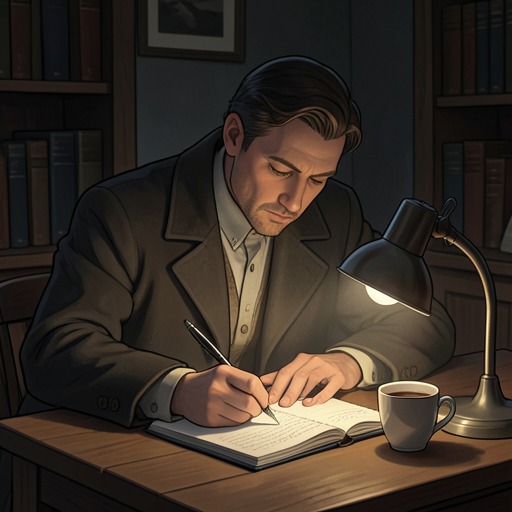
Hemingway recalls that he had begun breaking down his writing, getting rid of facility, and trying to make rather than describe. The change made writing wonderful to do but difficult: a single paragraph could consume an entire morning. The account makes the principle practical rather than merely aspirational. It entails resisting easy fluency and working to put the material rightly, even when the labor slows to the scale of individual sentences and paragraphs.
The principle is also linked to truth. In a later remembered conversation, Hadley recalls the three of them talking about how to make things true in writing and how to put them rightly instead of describing them. Her memory emphasizes not only a shared standard but its concrete subjects: they argued over lights, textures, and shapes. Their attention to such specifics suggests that making prose true depends on choosing and arranging precise details, not simply announcing what a scene means.
Conversation and Disagreement
Hadley remembers herself as an active participant in these discussions with Hemingway and Chink. She recalls that the three argued about specific things and made fun of one another; when the two men talked, she was included. Her recollection gives the principle a social dimension: the standard of truthful making emerged through close attention and argument, rather than as a rule voiced by Hemingway alone.
The book places Hemingway’s commitment beside a different account of literary work from F. Scott Fitzgerald. Fitzgerald explains that he first wrote stories he considered good, then altered them for magazine markets, making the changes he thought would help sell them. He defended this practice on the grounds that magazine earnings financed the books he wanted to write. Hemingway objected that writing any way other than one’s very best risked destroying talent, though Fitzgerald believed the changes did no harm because the original story had already been written. The disagreement clarifies the pressure behind Hemingway’s principle: for him, the distinction between making and describing belonged to a broader struggle against facility and alteration for sale.
Limits and Significance
The book presents the principle through practice, conversation, and contrast, not as a complete technical formula. Hadley’s recollection of Hemingway’s unsuccessful attempt to remember a story about a wisteria vine gives the remembered discussions an additional note of limitation: truthful writing is tied to what can be recalled and shaped, not to an assurance that every detail will come readily. The episode does not establish a rule for handling forgotten material, but it sits beside the group’s insistence on making things true rather than substituting description.
The principle’s significance lies in the tension between its desired exactness and its cost. Hemingway’s work toward making rather than describing gave him a powerful sense of purpose, but the difficulty of the process made writing a novel seem uncertain. The remembered arguments preserve the same tension in miniature: truth in prose is not presented as effortless inspiration, but as something pursued through precision, revision, and debate.